
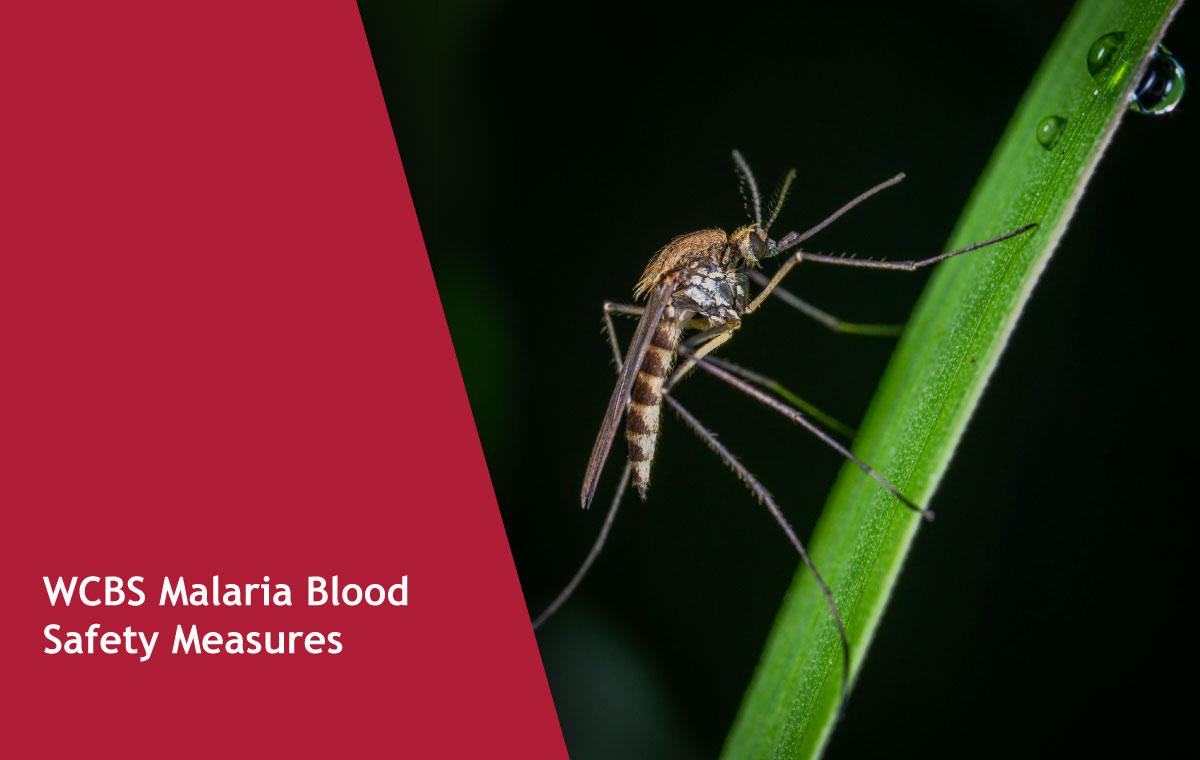
The Western Cape Blood Service (WCBS) strives for a malaria-free blood supply for patients by implementing careful donor selection, risk-based deferrals, and strict adherence to transfusion safety protocols, thereby reducing the risk of malaria transmission during blood transfusions.
In 2024, the WHO reported that 95% of global malaria cases (265 million) and 95% of malaria fatalities (579,000) occurred in the African region. South Africa reported 15,181 malaria cases, resulting in 55 deaths.
A key focus for WCBS is to ensure that the blood donor screening process is adequately strong to reduce the risk of malaria transmission through blood donations when donors have visited or resided in malaria-endemic areas. This is particularly relevant for whole blood and platelet apheresis donations, since the malaria parasite infects red blood cells and platelet products may contain residual red cells. Source plasma donations are permitted despite recent travel to malaria-endemic areas, as these products do not contain red blood cells and additional pathogen-inactivation techniques are performed at the fractionation company where the source plasma is sent.
Notable malaria-related donor deferrals include:
- Individuals who resided in a malaria-endemic region until the age of 15 are deferred for 3 years from the time they leave that area. If they return to a malaria-endemic area within 3 months prior to attempting to donate whole blood, they will also be deferred for 3 years from when they exit the area. High-risk regions include Zimbabwe, Botswana, and Swaziland.
- People who travel to a malaria-endemic area will be deferred for 1 month following their return. Those exhibiting signs and symptoms suggestive of malaria, including fever, chills, malaise, headaches, and muscle pain, will be ineligible to donate for 3 months. Individuals returning from such areas must be free of symptoms to donate blood. Those who have had malaria, undergone treatment, and fully recovered are permitted to continue donating blood following a 3 year deferral period from the time of treatment completion.
Even with these deferral protocols in place, there remains a residual risk of contracting malaria through blood transfusions. Prior to the implementation of the above-mentioned criteria, WCBS verified the transmission of malaria from donors to patients on 3 occasions in the preceding decade.
Blood Services in South Africa (WCBS and SANBS) employ a coordinated strategy for risk management and enhancing patient outcomes by collaborating with various organisations, including the National Bioproducts Institute (NBI), the National Institute of Communicable Diseases (NICD), the National Blood Safety Committee (NBSC), and the Independent Haemovigilance Committee.
Further Reading:
- Exchange Transfusion for Severe Malaria: Evidence Base and Literature Review
https://pmc.ncbi.nlm.nih.gov/articles/PMC10984079/ - The effect of blood transfusion on outcomes among African children admitted to hospital with Plasmodium falciparum malaria: a prospective, multicentre observational study
https://pubmed.ncbi.nlm.nih.gov/33091354/ - Transfusion-Transmitted Malaria: A Systematic Review and Meta-analysis
https://pmc.ncbi.nlm.nih.gov/articles/PMC6634438/
For more information about malaria and blood transfusion, contact Dr Caroline Hilton, Lead Medical Consultant (Caroline@wcbs.org.za).