
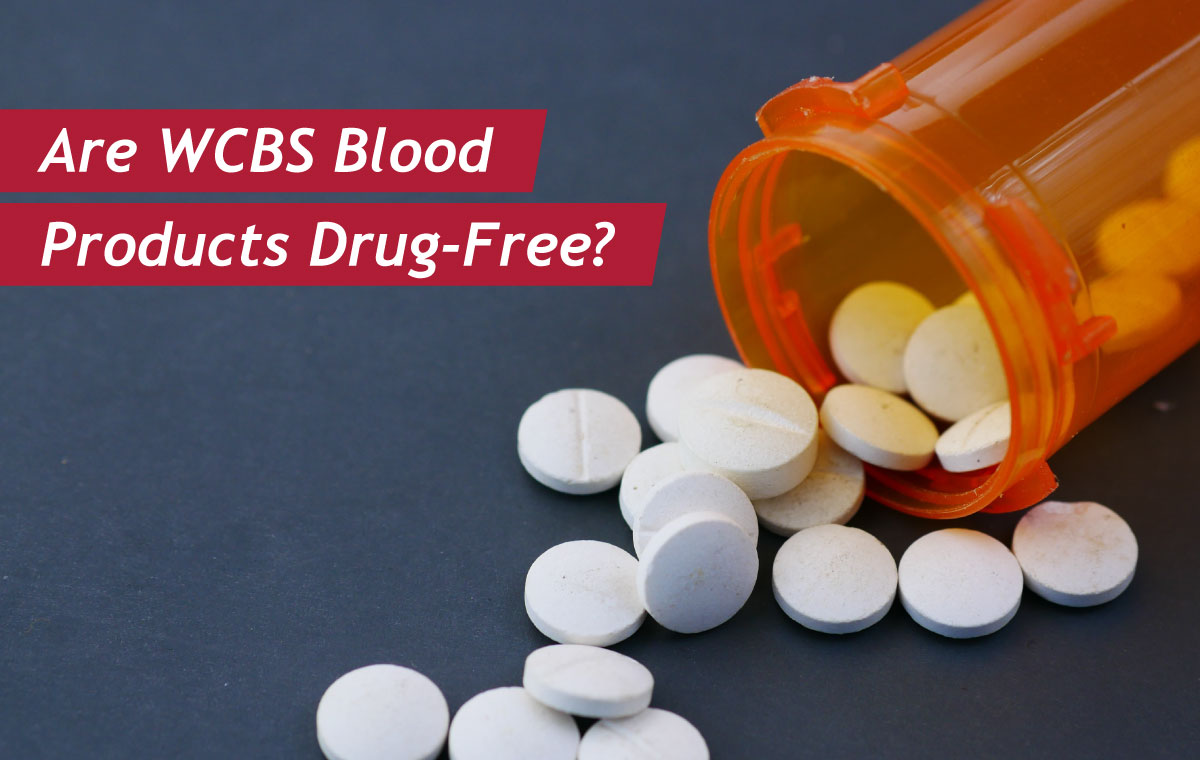
Donors are permitted to donate blood if they use certain medications or recreational substances, according to our internationally-aligned donation criteria. WCBS would therefore not be able to confirm that its blood products are free from drugs.
Donated blood may contain traces of medications and recreational drugs. The list of acceptable medications includes, for example, those used to treat high blood pressure, diabetes mellitus, high cholesterol, allergies, as well as immunisations, vaccinations and contraception.
Alcohol use is acceptable, as are recreational drugs — taken orally or nasally – provided the donor is not acutely intoxicated at the time of donation. However, recreational drugs taken by injection will disqualify a donor for 3 months after the last use. Cannabis drops or oil used for medicinal purposes may require a deferral, depending on the underlying reason for their use.
Medications for certain illnesses or conditions that deem individuals unfit for donation, such as certain cancers or autoimmune diseases, will defer them from donation. Any teratogenic medication (e.g. certain anti-epileptic, acne, hair-loss and prostate drugs) will preclude the donor due to the potential risk to a pregnant woman who may receive their blood product.
The blood donation acceptance criteria are reviewed annually by the South African blood services and compared to international practices to ensure both donor and patient safety.
For more information about blood donation, visit our website (www.wcbs.org.za).