
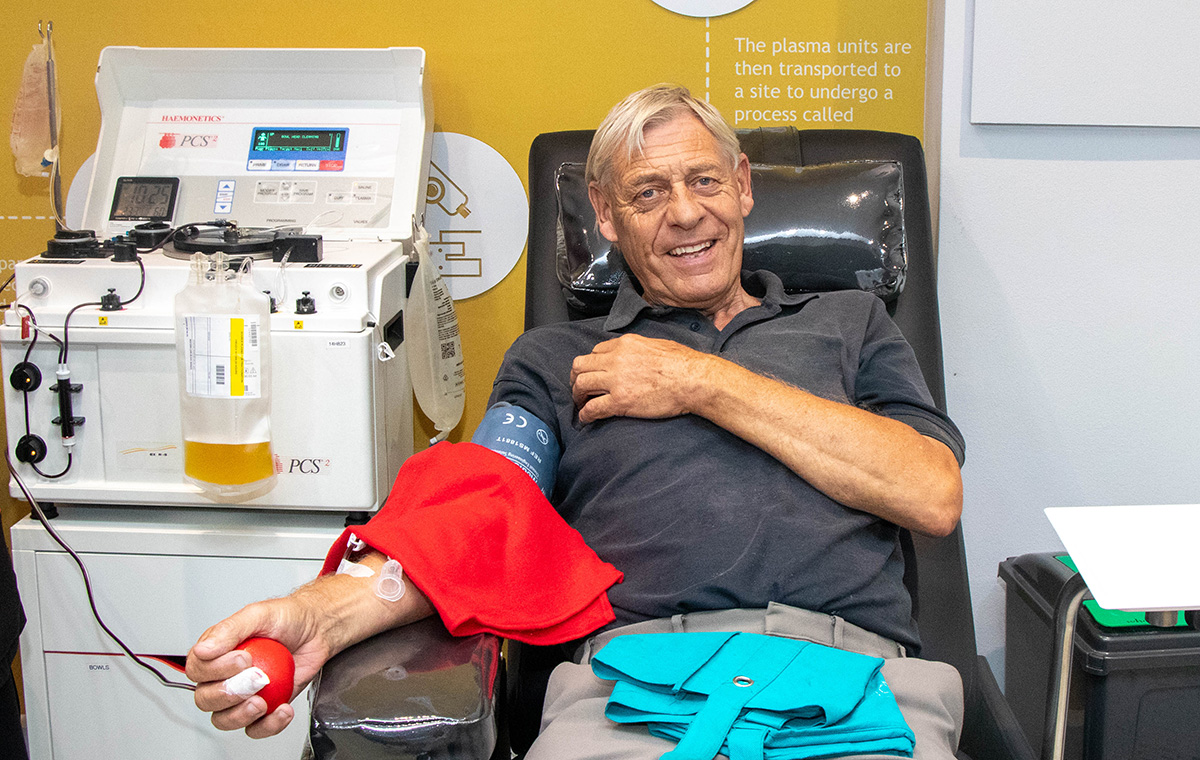
Donated blood is a lifeline for countless patients who depend on the selfless act of donors. While whole blood donation is the most widely known form, there are other types of blood donations, such as apheresis and specialised donations that play a crucial role in treating a wide range of medical conditions. At the Western Cape Blood Service (WCBS), our Apheresis and Specialised Donation Clinic provides hospitals across the Western Cape with targeted blood products, ensuring patients receive the lifesaving treatments they need.
What is Apheresis donation?
It’s a specialised donation procedure in which blood is drawn from the donor, separated into its components using a centrifuge, and only the required component, such as platelets or plasma, is collected, while the remaining blood components are returned to the donor.
Unlike whole blood donation, which usually takes around 30 minutes for the entire process, apheresis donation typically takes between 45 and 90 minutes, depending on the component being collected.
Platelet Donors
To become a platelet donor, you must meet the general donor criteria and have donated whole blood at least five times. Platelet donors should also have easily accessible veins and be available to visit the WCBS Apheresis Clinic at our head office in Ndabeni on weekday mornings. Your body will replace the platelets that you’ve donated within about two days, and you can donate platelets every four weeks.
Platelet transfusions are essential in many medical treatments. They are used to support cancer patients undergoing chemotherapy, in major surgeries and organ transplants, to treat traumatic injuries that cause severe bleeding and to treat blood disorders or autoimmune conditions.
For more about platelet donation click here.
Plasma Donors
Plasma donors must be between the ages of 18 and 65, weigh at least 55 kg, have a haemoglobin level between 12g and 16g per decilitre as well as easily accessible veins. Because plasma is replenished by the body more quickly than red blood cells, plasma donors can donate every two weeks.
Like platelet donation, plasma is also collected by apheresis technique using a centrifuge and the donation process generally takes around 45 minutes.
Plasma is used in emergency situations to treat trauma patients, severe burns or shock by restoring blood volume and supply the clotting factors to control bleeding. It is also used in the treatment of chronic conditions such as haemophilia and immune deficiency disorders. Plasma can be donated at one of the following blood donor centres: 9 Long Street, Blue Route Mall, N1 City, Kenilworth Centre, Cape Gate Mall as well as at our Head Office.
For more information on plasma donation click here.
Why donors make the switch
Many donors choose to move from whole blood donations to platelet and plasma donation after learning how great the need is for these blood products.
One donor, who has been giving blood for 43 years, became a platelet and plasma donor after his wife, mother and sister were all diagnosed with cancer. Donating platelets is a meaningful way he has supported his own family as well as countless other patients facing similar challenges.
Another donor was encouraged to become a platelet donor because he has suitable veins and a high platelet count. He explained why he decided to make the switch, “Many people donate whole blood but not everyone can be a platelet donor.”
A dedicated nurse and long-time blood donor also chose to switch to platelet and plasma donations. As a healthcare professional, she understands the need for these products and enjoys being able to donate more often.
Specialised Donation Services
In addition to apheresis donations, we operate a Specialised Donation Clinic at our Head Office in Ndabeni, which provides a range of clinical services, including designated donations and therapeutic phlebotomy.
Designated Donations
Patients are able to receive blood from family or friends with compatible blood groups through designated donations. This option is typically used for young patients who will require regular transfusions throughout their lifetime, or for babies who are having elective surgical procedures
All designated donors need to meet the eligibility requirements for donation and the request must come from the patients’ doctor.
Therapeutic Phlebotomy
This is a medically prescribed procedure where a patient donates whole blood to help manage a condition that causes high iron levels or elevated red blood cells in the body. Conditions that may require therapeutic phlebotomy include hereditary haemochromatosis, secondary polycythaemia and polycythaemia vera. Excessive iron in the blood can cause damage if it’s deposited in the liver, pancreas, heart and other organs. Increased red cell counts can thicken the blood, increasing the risk of blood clots that could result in heart attacks or strokes.
In most cases, the donated blood can still be used for transfusion, provided the donor meets the blood donation criteria.
Every blood donation has the potential to save lives and platelet and plasma donations can make a great impact for patients requiring specialised treatments. The commitment shown by all blood donors makes it possible for hospitals across the Western Cape to provide lifesaving treatments every day and every blood donation, regardless of the type, plays a vital role in ensuring patients receive the treatment and care they need most.