
Explore the science, surprises, and significance of your blood type.
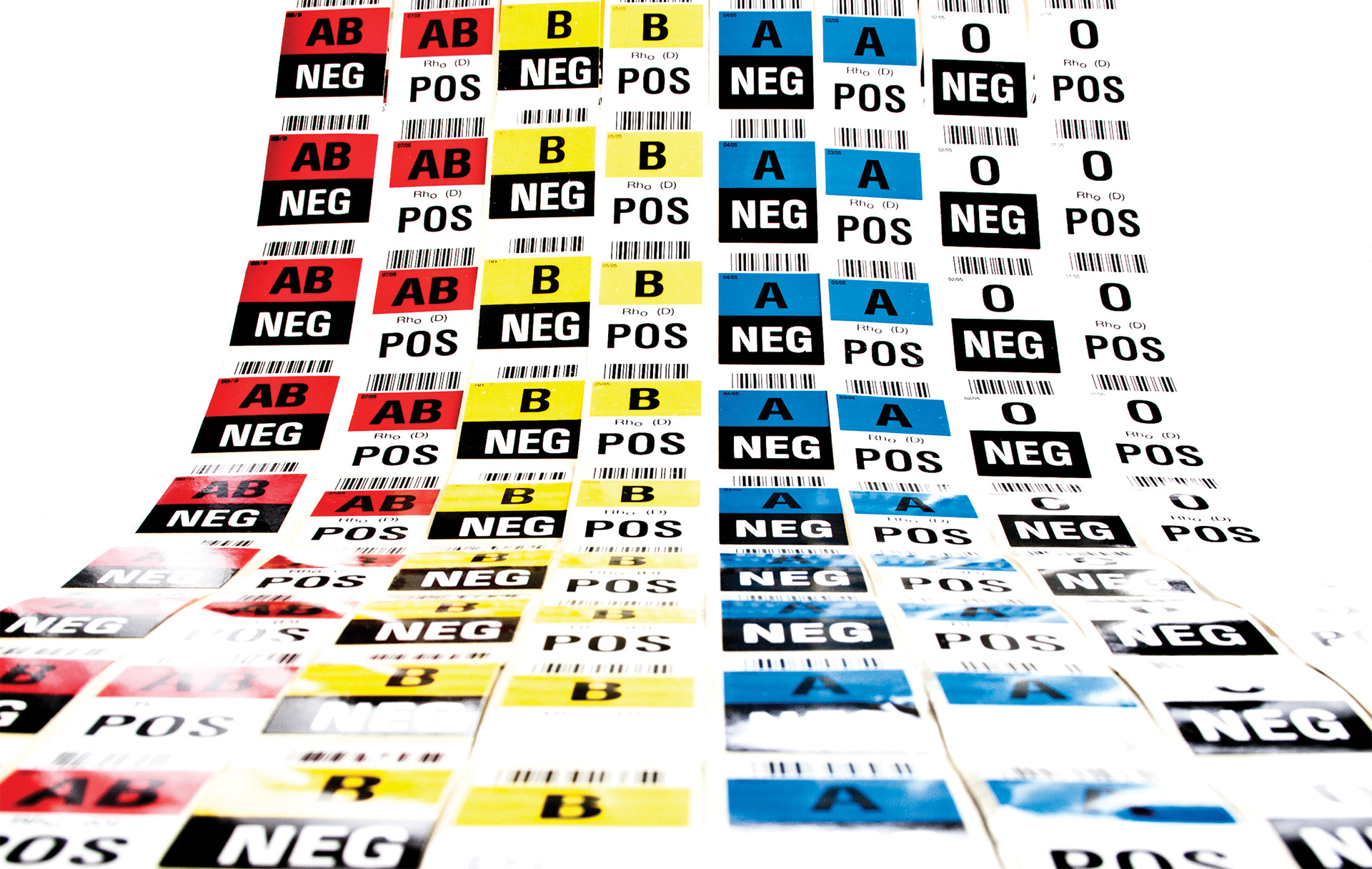
Donating blood is simple, but much occurs behind the scenes from the moment we collect your blood to when it is transfused to a patient. You can belong to one of four different blood groups or types, and we must match your blood type with that of the patient receiving it. Blood services always check the blood groups of patients before administering blood to ensure the correct type is given. If a patient receives the wrong blood type, antibodies in their blood targeting the A or B proteins on the transfused red blood cells attach to the red cells, break them apart, and may cause a severe reaction, which could even be fatal.
Here are some answers to questions that our donors have asked:
Why Is Group O the Universal Donor?
We love all the blood groups, but what makes type O blood unique is that it can be given to any patient, regardless of their blood type. This is because the red blood cells from group O donors lack the A or B proteins on their surface, which can react with antibodies in the blood of patients with type A or B blood.
Group O red blood cells are essential in emergencies when a patient requires blood quickly and there isn’t enough time to verify their blood type in our laboratory. It is safe to give type O red blood cells to anyone, which is why this blood type is frequently used in urgent situations. Our group O blood donors are aware that we often contact them to donate blood when there is a shortage of emergency blood.
Why Is Group AB the Universal Recipient?
Type AB is the rarest blood group, with only 4-8% of the population having it. You are quite fortunate if you are type AB and need a blood transfusion because you can receive any blood group type. This is because type AB donors do not have the A or B antibodies in their blood that react with the A or B proteins on the donor red cells. However, type AB blood can only be given to AB patients, as the red cells contain A and B proteins that would react with the antibodies in the blood of type A, B, and O patients.
What Is a Rare Blood Type?
We often discuss the A and B proteins on red blood cells, which determine whether someone has a group A, B, AB, or O blood type, but many other proteins on the surface of our red blood cells are also important.
If a person has a rare blood group, it means that only a very small number of people in the world have it. Having a rare blood group usually means that the person either lacks a common protein on their red blood cells or carries an unusual one. Examples of rare blood types are Rh null, Bombay and Diego blood groups.
We maintain detailed records of donors with rare blood groups, allowing us to contact them and request donations when a patient with the same rare blood group requires blood. There is a rare blood group registry in Durban where units from donors with rare blood groups are frozen and stored for such situations. Blood products sometimes need to be transported across the world to help patients with rare blood groups.
How Many People Share My Blood Group?
The most common blood group is type O, followed by type A, type B and type AB.
Can Your Blood Type Change?
Under normal circumstances, no, but there are very rare instances where this can happen, for example, if you were to have a bone marrow transplant, or from a severe bacterial infection that can temporarily change the shape of your red cell proteins.
How Can Your Blood Type Affect Pregnancy?
Knowing your blood group when you become pregnant is important, and it is routinely tested at antenatal clinics. Have you noticed when the words ‘positive’ or ‘negative’ are added to your blood group? This indicates whether a specific protein called RhD is present on your red blood cells. If you have the RhD protein, you are ‘positive’; if not, you are ‘negative’. All women who are ‘negative’ for RhD need to have their blood carefully checked to ensure they have not developed antibodies to this protein. RhD-negative women can develop antibodies if exposed to RhD-positive red blood cells, either through previous pregnancies when their baby is RhD-positive or via transfusion with RhD-positive blood. RhD-negative pregnant women with antibodies require close monitoring of their blood to make sure the levels do not get too high. If a RhD-negative pregnant woman develops high levels of RhD antibodies, these can cross the placenta and attach to her baby’s red blood cells (if they are RhD positive), causing them to break down and harming the baby.
Which Blood Group Do Mosquitoes Like?
This is a contentious question! Some studies have shown that mosquitoes prefer people with type O blood, and that type A people are their least favourite. It isn’t easy to understand how a mosquito would be able to know your blood type when it is buzzing around you, though. Other studies have suggested that mosquitoes are attracted to specific skin odours and the natural bacteria on your skin, as well as to dark clothing colour, higher body temperature, higher carbon dioxide emissions through breathing, and increased alcohol consumption.
Do Blood Group Diets Work?
The idea that your optimal diet and exercise regimen depends on your blood type was proposed by Peter D’Adamo in 1996, although there is no scientific evidence to support his theory. He suggested that type A donors should follow a vegetarian diet, type B donors should have a high dairy content, type AB donors could follow a combination of a vegetarian and high dairy diet, and type O donors should thrive on a diet that is high in animal protein. We do not think that there is any ‘weight’ in his theory.
At the end of the day, your blood type is more than just a letter — it’s a vital key to saving lives. Whatever group you belong to, every donation plays an irreplaceable role in keeping patients safe and healthy.