
We would like to take this opportunity to educate our blood users about the causes and safety of lipaemic blood donations.
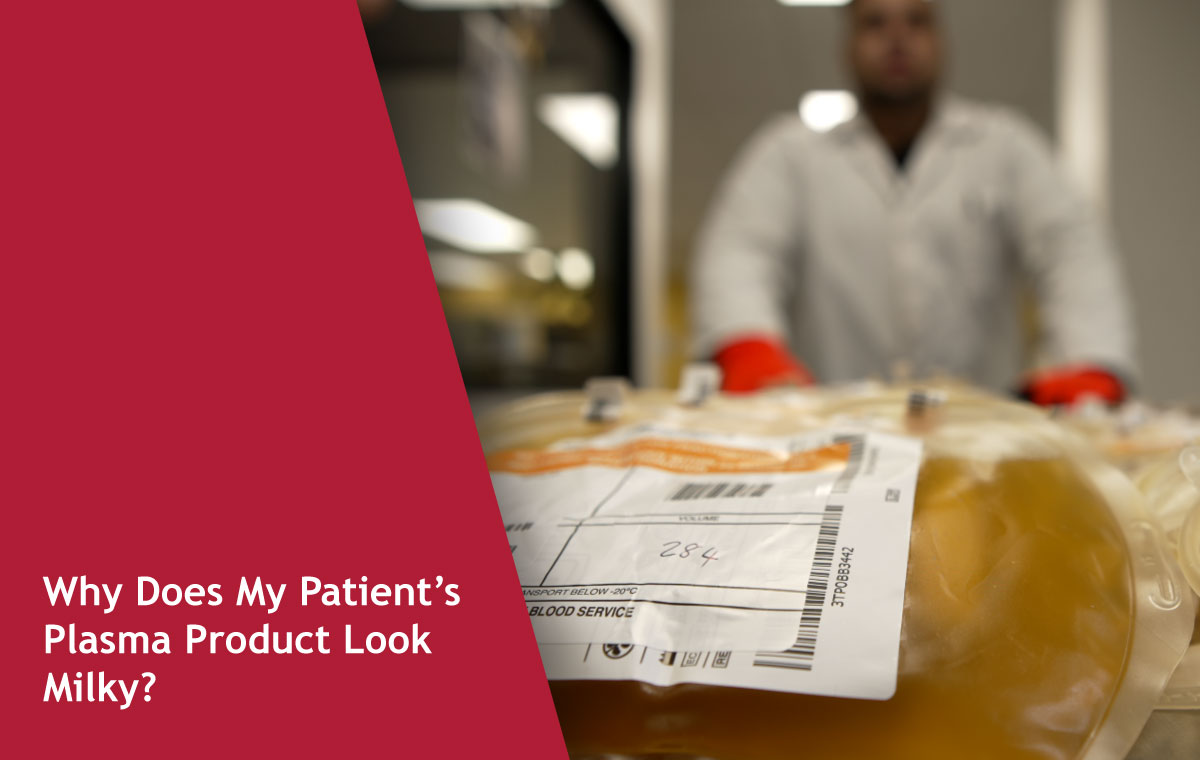
The milky appearance that is very occasionally seen in plasma products is due to high triglyceride levels in the donor. This is commonly caused by donors having a meal with a high fat content shortly before donating blood, or due to a medical condition causing raised triglyceride levels in their blood, such as diabetes, hypothyroidism, liver or kidney disease. Studies have shown that lipaemic donations are often associated with male donors, smokers and people who donate blood in the evening (after having eaten supper).
The Western Cape Blood Service (WCBS) identifies all donations that appear lipaemic and sends donor samples to an external laboratory for triglyceride testing to ensure that the sample is suitable for infection marker testing. The analysers in our laboratory have a specific triglyceride limit above which testing is not deemed accurate. Provided the patient’s result does not exceed this limit, testing and processing of the unit can continue. Since starting lipaemic donation screening in October last year, only four whole blood units have been discarded.
The latest research confirms that lipaemic donations are safe for clinical use, but should not be used for specialised situations like exchange or intrauterine transfusions. Earlier studies suggested a possible association with increased haemolysis in stored lipaemic red cell products, but this was not replicated in more recent studies using larger sample sizes.
The WCBS medical team also monitors whether donors have repeatedly elevated triglyceride levels or if isolated levels are very high, in order to inform them. Blood donors are encouraged not to eat a high-fat meal prior to donating to prevent this complication.
For more information about lipaemic blood donations or product safety in general, contact Dr Caroline Hilton, Lead Medical Consultant (Caroline@wcbs.org.za).