
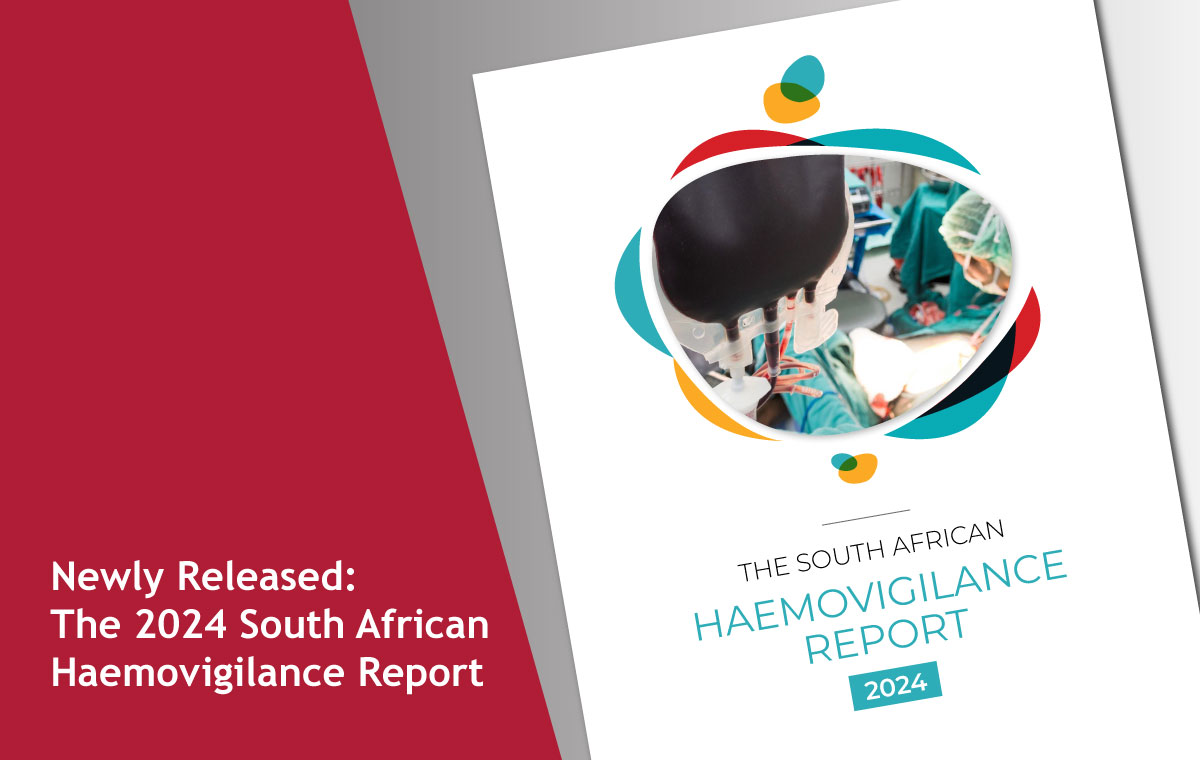
Get a full analytical review about current trends in blood collections, issues and sufficiency, transfusion-related adverse events, transfusion-transmitted infections and the look-back programme, donor haemovigilance, as well as changes in strategy and procedures undertaken by WCBS and SANBS to improve blood safety, in The South African Haemovigilance Report 2024 compiled by the Independent Haemovigilance Committee (IHC).
The 2024 South African Haemovigilance Report
Alert! The authors of the report expressed concern that incorrect blood product transfusions accounted for 33.3% (previously 29.5%) of all serious adverse events in 2024, due to breaches in blood transfusion protocols regarding sampling, crossmatching, and transfusion. The Report cites that hospital sampling errors often occur when an individual collects multiple samples from different patients at a time without labelling each sample after it’s drawn, and an incorrect patient file is referenced for completion of the blood request. Blood Bank manual transcription crossmatch errors occur when, owing to various reasons, the electronic crossmatch cannot be completed automatically, and the operator may assign an incorrect blood group or overlook the patient’s previous transfusion history on the system. In addition to this, hospital staff fail to follow established protocols regarding pre-transfusion patient identification, resulting in incorrect blood being transfused to a patient, or a blood transfusion being given when none was indicated.
It was also highlighted by the authors that in cases of severe acute haemorrhage, treating doctors prescribe group O emergency blood transfusions without regard for immunological consequences for RhD negative women of childbearing age.
The report commended WCBS for implementing a second-sample policy for first-time blood recipients to mitigate crossmatch samples being collected from the incorrect patient. If there is no record of a previous transfusion history, the Blood Bank will contact the ward to request a second sample, to confirm a blood group match with the first sample.
For more information about the annual haemovigilance report, or to request educational talks for your hospital or healthcare facility, contact Dr Caroline Hilton, Lead Medical Consultant (caroline@wcbs.org.za).